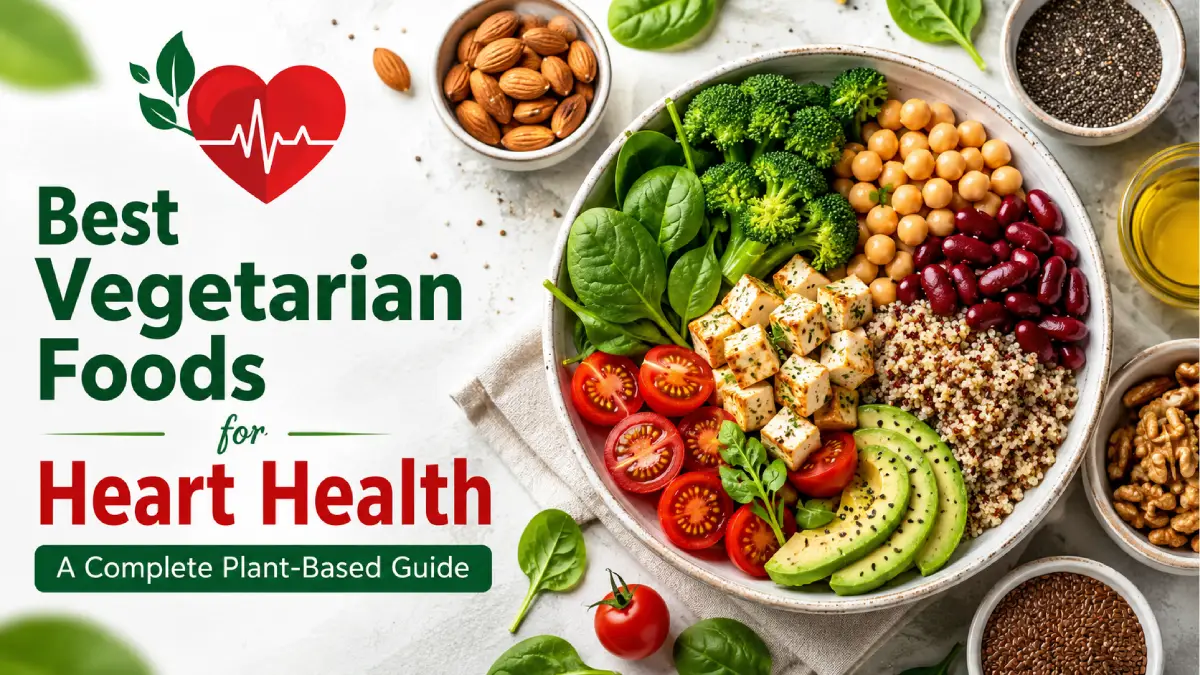
Your heart works hard every day to keep you healthy, so taking care of it should be a priority. One of the easiest ways to support your heart is by choosing the right foods. The good news is that many vegetarian foods are packed with nutrients that can help keep your heart strong and healthy.
Foods like oats, leafy green vegetables, nuts, seeds, beans, and fresh fruits provide fiber, healthy fats, vitamins, and antioxidants that support heart health. These foods may help maintain healthy cholesterol levels, support normal blood pressure, and improve overall well-being.
The best part is that you don’t need a strict diet or expensive ingredients. Simple changes to your daily meals can make a big difference over time. In this article, we’ll explore the best vegetarian foods for heart health and how you can easily include them in your diet to support a healthier lifestyle.
Why Plant-Based Foods Are Good for Your Heart?
A heart-friendly diet isn’t just about avoiding unhealthy foods, it’s also about choosing foods that actively support your cardiovascular system. Plant-based foods contain a variety of nutrients that help your heart perform its essential functions. From supporting healthy blood flow to helping the body get important vitamins and minerals, these foods can be an important part of a balanced lifestyle.
- Help Maintain Healthy Cholesterol Levels — Many plant-based foods contain soluble fiber, which can help reduce LDL (bad) cholesterol. Lower cholesterol levels support better heart health and blood flow.
- Support Healthy Blood Pressure — Foods such as leafy greens, beans, bananas, and seeds contain potassium and magnesium, which help maintain normal blood pressure levels.
- Reduce Inflammation — Chronic inflammation may increase the risk of heart problems. Plant foods contain antioxidants and natural compounds that help protect the body from oxidative stress.
- Support Healthy Blood Vessels — Certain fruits and vegetables contain nutrients that help blood vessels stay flexible and work properly, allowing blood to flow more efficiently.
- Provide Heart-Healthy Fats — Nuts, seeds, and avocados contain healthy unsaturated fats that can support heart health when used in place of foods high in saturated fat.
- Help Maintain a Healthy Weight — Being overweight can put extra strain on the heart. Many plant-based foods are filling and nutrient-rich, making it easier to maintain a healthy weight.
- May Lower the Risk of Heart Disease — A diet rich in whole plant foods is associated with better heart health and can be an important part of a heart-friendly lifestyle.
15 Best Vegetarian Foods for Heart Health
1. Oats
Oats are a whole grain known for their high fiber content, especially beta-glucan, a type of soluble fiber that supports heart health. They also provide important nutrients such as magnesium, iron, and B vitamins, making them an excellent choice for a balanced diet.
Benefits:
- Loaded with vitamins and minerals
- Supports healthy cholesterol levels
- Keeps you feeling full for longer
Easy Ways to Eat:
- Oatmeal
- Overnight oats
- Smoothies
2. Walnuts
Walnuts are nutrient-dense nuts that provide plant-based omega-3 fatty acids, antioxidants, protein, and healthy fats. These nutrients play an important role in reducing strain on the heart, making walnuts one of the most heart-friendly snacks you can include in your diet.
Benefits:
- Provide healthy fats
- Support heart function
- Help improve cholesterol balance
Easy Ways to Eat:
- As a snack
- In salads
- Mixed with yogurt
3. Almonds
Almonds are packed with heart-supporting nutrients, including vitamin E, fiber, magnesium, protein, and healthy monounsaturated fats. Their nutrient profile makes them a convenient and satisfying addition to a heart-healthy eating plan.
Benefits:
- Rich in vitamin E
- Support healthy cholesterol levels
- Good source of fiber
Easy Ways to Eat:
- Handful as a snack
- Add to oatmeal
- Sprinkle on salads
4. Leafy Green Vegetables
Leafy green vegetables such as spinach, kale, mustard greens, fenugreek leaves, and collard greens are loaded with vitamins A, C, and K, along with folate, potassium, magnesium, and antioxidants. These nutrients help support normal blood pressure and overall health.
Benefits:
- Contains essential nutrients
- Support healthy blood pressure
- Low in calories
Easy Ways to Eat:
- Salads
- Smoothies
- Vegetable curries
5. Lentils
Lentils are a versatile legume that provides plant-based protein, dietary fiber, iron, folate, potassium, and magnesium. They are affordable, filling, and an excellent choice for supporting both heart health and overall nutrition.
Benefits:
- High in protein
- packed with fiber
- Support healthy cholesterol levels
Easy Ways to Eat:
- Dal
- Soups
- Salads
6. Chia Seeds
Chia seeds are tiny nutritional powerhouses that provide omega-3 fatty acids, fiber, protein, calcium, magnesium, and antioxidants. Despite their small size, they deliver a wide range of nutrients that support overall heart health.
Benefits:
- High in fiber
- Source of healthy fats
- Easy to add to meals
Easy Ways to Eat:
- Chia pudding
- Smoothies
- Oatmeal
7. Flaxseeds
Flaxseeds are rich in plant-based omega-3 fatty acids, fiber, protein, and lignans, which are beneficial plant compounds. They can be a simple addition to meals while providing valuable nutrients for heart wellness.
Benefits:
- Support heart health
- High in nutrients
- Easy to include in recipes
Easy Ways to Eat:
- Ground into smoothies
- Mixed into yogurt
- Added to baked goods
8. Beans
Beans such as kidney beans, black beans, chickpeas, and navy beans are packed with fiber, protein, folate, potassium, and iron. They are filling, nutritious, and make an excellent plant-based protein source.
Benefits:
- Help maintain healthy cholesterol levels
- Keep you full longer
- Dense with plant protein
Easy Ways to Eat:
- Bean salads
- Soups
- Curries
9. Avocados
Avocados are known for their creamy texture and are rich in healthy monounsaturated fats, potassium, fiber, folate, and vitamin K. These nutrients make them a valuable addition to a heart-conscious diet.
Benefits:
- Rich in monounsaturated fats
- Source of potassium
- Nutrient-dense
Easy Ways to Eat:
- Toast topping
- Salads
- Smoothies
10. Berries
Berries such as blueberries, strawberries, raspberries, and blackberries are packed with antioxidants, vitamin C, fiber, and beneficial plant compounds. Their natural sweetness makes them an easy and nutritious choice.
Benefits:
- Protects cells from damage
- Naturally sweet
- Rich in vitamins
Easy Ways to Eat:
- Smoothies
- Oatmeal
- Fruit bowls
11. Broccoli
Broccoli is a nutrient-rich cruciferous vegetable that provides fiber, vitamin C, vitamin K, folate, potassium, and antioxidants. It is a versatile vegetable that can easily be included in many healthy meals.
Benefits:
- Rich in fiber
- Fights with oxidative stress
- Promotes overall cardiovascular wellness
Easy Ways to Eat:
- Stir-fries
- Soups
- Roasted
12. Tomatoes
Tomatoes contain lycopene, a powerful antioxidant, along with vitamin C, potassium, folate, and vitamin K. Whether eaten fresh or cooked, they can add flavor and valuable nutrients to everyday meals.
Benefits:
- Supports healthy aging
- Low in calories
- Versatile ingredient
Easy Ways to Eat:
- Salads
- Soups
- Sandwiches
13. Garlic
Garlic is widely used in cooking and contains beneficial compounds such as allicin, along with manganese, vitamin B6, vitamin C, and selenium. It adds flavor to dishes without the need for extra salt.
Benefits:
- Improves blood circulation
- Adds flavor without extra salt
- Easy to use in cooking
Easy Ways to Eat:
- Curries
- Soups
- Stir-fries
14. Green Tea
Green tea is a refreshing beverage rich in antioxidants called catechins. It also contains small amounts of minerals and beneficial plant compounds that contribute to overall wellness and make it a healthy drink choice.
Benefits:
- Helps reduce inflammation
- Supports overall wellness
- Low in calories
Easy Ways to Drink:
- Hot tea
- Iced tea
15. Pomegranate
Pomegranates are colorful fruits packed with antioxidants, fiber, vitamin C, vitamin K, and potassium. Their juicy seeds provide a delicious way to add nutrients and natural sweetness to your diet.
Benefits:
- Maintain healthy blood pressure
- Supports healthy circulation
- Packed with nutrients
Easy Ways to Eat:
- Fresh seeds
- Salads
- Smoothies
Foods to Avoid for Better Heart Health
- Sugary Drinks — Soft drinks, packaged juices, and energy drinks contain high amounts of added sugar. Regular intake can lead to weight gain and may negatively affect heart health over time.
- Deep-Fried Foods — Foods like samosas, pakoras, fries, and other fried snacks are high in unhealthy fats that can increase cholesterol levels and strain the heart.
- Processed and Packaged Snacks — Chips, biscuits, and ready-to-eat snacks often contain trans fats, excess salt, and preservatives that are not good for heart health.
- Excess Salt (High-Sodium Foods) — Too much salt from pickles, papad, instant noodles, and packaged foods can raise blood pressure and increase the risk of heart problems.
- Refined Grains and Sugary Foods — White bread, pastries, cakes, and sweets are low in nutrients and high in sugar or refined flour, which can affect blood sugar and heart health.
- Excess Dairy Fat (Full-Fat Products) — Full-cream milk, butter, and cream in large amounts contain saturated fats that may increase cholesterol levels if consumed too often.
Simple Heart-Healthy Vegetarian Meal Plan
Breakfast
Start your day with a light and nutritious meal like oatmeal topped with fruits such as banana or berries, along with a few nuts and seeds. You can also have whole wheat toast with avocado or a smoothie made with spinach, fruits, and chia seeds.
Lunch
For lunch, choose a balanced plate that includes whole grains like brown rice or roti, along with protein-rich foods like lentils (dal), beans, or chickpeas. Add plenty of vegetables such as spinach, broccoli, carrots, and tomatoes to make it more filling and healthy.
Snack
In the evening, go for light and heart-friendly snacks such as a handful of almonds or walnuts, roasted chickpeas, fruit salad, or yogurt with flaxseeds. Green tea can also be a good option.
Dinner
Keep dinner simple and easy to digest. You can have vegetable soup, dal with roti, or a stir-fry of mixed vegetables with beans or tofu. Try to avoid heavy or oily foods at night for better heart health.
Tip
Try to keep your meals fresh, homemade, and balanced. Eating smaller portions and including a variety of plant-based foods every day can help support a healthy heart in the long run.
Tips for Maintaining a Healthy Heart Naturally
- Stay physically active with simple exercises like walking, yoga, cycling, or light workouts to improve blood circulation and keep your heart strong.
- Eat more whole plant-based foods such as fruits, vegetables, whole grains, nuts, seeds, and legumes to support overall heart function.
- Maintain a healthy body weight to reduce extra strain on the heart and lower the risk of heart-related issues.
- Manage stress through deep breathing, meditation, listening to music, or spending time in nature to keep your heart calm and healthy.
- Get 7–8 hours of good sleep daily so your body and heart can rest, repair, and function properly.
- Drink enough water throughout the day to support healthy blood flow and overall body functions.
- Avoid smoking and limit harmful habits that can damage blood vessels and increase heart disease risk.
- Go for regular health check-ups to monitor blood pressure, cholesterol, and overall heart health for early prevention.
Conclusion
Taking care of your heart doesn’t have to be complicated. By simply choosing the right foods and making a few healthy lifestyle changes, you can support your heart in the long run. A vegetarian diet rich in fruits, vegetables, whole grains, nuts, seeds, and legumes provides the essential nutrients your heart needs to stay strong and healthy.
Small daily habits like eating balanced meals, staying active, managing stress, and getting proper sleep can make a big difference over time. Remember, it’s not about perfection, it’s about consistency and making better choices every day.
Start adding these heart-friendly vegetarian foods to your routine and take one step at a time toward a healthier lifestyle. Your heart will thank you for it in the future.
If you want more simple, practical, and science-backed health guides like this, explore more articles on Health Routine Hub and start building a healthier lifestyle today.
Frequently Asked Questions
Can a vegetarian diet really improve heart health?
Yes, a vegetarian diet can support heart health because it is rich in fiber, antioxidants, and healthy nutrients that help maintain normal cholesterol and blood pressure levels.
Which vegetarian food is best for heart health?
Foods like oats, nuts, seeds, lentils, leafy greens, berries, and avocados are some of the best options for supporting a healthy heart.
How often should I eat heart-healthy foods?
You should try to include heart-healthy foods in your daily meals. Even small, consistent changes every day can make a big difference over time.
Do I need to completely avoid oily or fried foods?
You don’t need to avoid them completely, but you should eat them in moderation because too much fried or processed food can affect heart health.
Are fruits enough for a healthy heart?
Fruits are very healthy, but they should be part of a balanced diet that also includes vegetables, whole grains, nuts, seeds, and legumes.
How long does it take to see results from a healthy diet?
Heart health improvements happen gradually. With consistent healthy eating and lifestyle habits, you may start feeling better within a few weeks to months.

Pooja Gautam is a health content writer dedicated to creating accurate, research-based articles on nutrition, wellness, fitness, and healthy living. She aims to provide practical, easy-to-understand health information that helps readers make informed lifestyle choices every day.